August 10, 2024

Are we there yet? That’s the question that inevitably surfaces deep into a long journey, and Habs fans have begun asking with respect to the status of rebuild.
On November 28, 2021, the Montreal Canadiens fired General Manager Marc Bergevin and hired Jeff Gorton as the Executive Vice President of Hockey Operations, signalling the Habs were about to launch a rebuild. On January 18, 2022, Kent Hughes was hired as the new GM.
Some would argue that Bergevin had already begun the rebuild process, but that assertion is nonsense. We can all agree that Hughes and Gorton ( HuGo) inherited some strong pieces for a new core, even if Bergevin fell ass backwards into landing some of them.
If we apply the typical stages of a rebuild project to what we have seen HuGo accomplish thus far – including the pieces they inherited, good and bad – we can get a reasonable sense of the work that remains before the rebuild can be regarded as complete.
Stage 1: Planning
Every good rebuild begins with a blueprint. The home owners bring their vision for the rebuilt home, including their “must haves”, and an architect is tasked with bringing that vision and list together in the most efficient way possible within the footprint of the old home.
Montreal’s owner, Geoff Molson, shared his vision and wish list with the announcement of the leadership change. “… the time has come for a leadership change within our hockey operations department that will bring a new vision and should allow our fans and partners to continue cheering for a championship team.”
In the press conferences that followed the hiring of Gorton and Hughes respectively, we got a sense of the “must haves” and the vision. An offensively-minded team that plays with speed and skill. A modernized possession team that is informed by applied analytics and fuelled by strong player development. A team that players want to be part of. A team that is consistently competitive for a sustained period of time.
That was and is the blueprint for the rebuild.
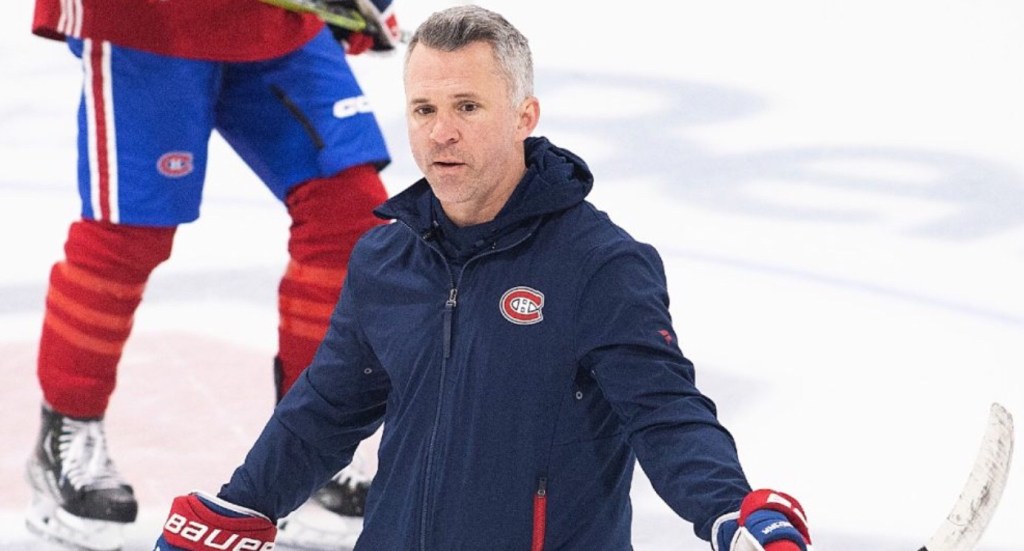
The first important step for HuGo was the hiring of Martin St. Louis on February 9, 2022. A modern, offensive-minded coach was added to complete the leadership trio for this version of the Montreal Canadiens.
Stage 2: Budgeting
The boundary for every rebuild is a budget. Owners may know what they want, but there is generally a rude awakening moment where wishes meet the realities of a budget. There are three noteworthy factors here where the Habs rebuild is concerned.
HuGo inherited a messy budget. That’s the first factor, and a good indication that Bergevin wasn’t committed to rebuilding. Berge spent like a drunken sailor in the last two years of his tenure. In addition to LTIR for Carey Price and Shea Weber, HuGo inherited a list of big contracts that had been handed out by their predecessor, and several were practically immovable. It’s understandable if the beloved Brendan Gallagher comes to mind.
A flat cap consequential to the pandemic is the second noteworthy factor where the budget is concerned. Most GMs undertaking a rebuild have been able to anticipate a gradual increase in the cap. This wasn’t the case when HuGo took over. Granted, all teams were in the same boat, and it was up to HuGo to get creative in how to exploit that reality. The name Sean Monahan should come to mind.
A third noteworthy factor is that while all teams are subjected to the same salary cap where player personnel are concerned, the Montreal Canadiens have always been in a strong financial position to spend in creative ways to improve the team. Hockey clubs with money are smart if they spend big on coaching and development, and on building an attractive work culture. Inexplicably, the Habs didn’t… not until the HuGo era. Adam Nicholas definitely comes to mind.
It a salary cap context, managing the budget well is essential to a successful rebuild.
Stage 3: Demolition
If you’re rebuilding a home, the tear down has to be taken care of before any construction can begin. Rebuilding a hockey team isn’t terribly different. The fastest route to becoming the team you want is to tear down what you have that doesn’t fit in your new vision, and start over.
This means selling off players with value and accumulating assets while also icing a team that will finish near the bottom of the standings so you can draft at the top of the order. The best plan is to demolish hard and fast so that you can build back up quickly.
Bergevin departed Montreal leaving a contract situation that made a swift demolition practically impossible. Big contracts on LTIR, big contracts to under-performers, and big contracts to players already in decline when the contracts were signed.
HuGo has been able to offload some of those contracts without hurting the team by giving up assets. UFAs have been dealt in turn, starting with Ben Chiarot at that first trade deadline. The Weber contract was moved quickly with no loss of assets. Guys like Hoffman and Petry were moved out for value. Bad contracts like the one assigned to Paul Byron reached its expiry date after a lengthy LTIR.
Several problematic contracts remain. Demolition has been stalled in a few areas, and in my view the rebuild cannot be deemed complete until the Habs are able to move on from the bulk of them. This might happen through wily GMing, or just through the passage of time.
Stage 4: Construction
Construction is where the real fun happens – this is where a newly rebuilt house starts taking shape, piece by piece.
Only the willfully obtuse can deny the accomplishments of HuGo to date in reconstructing the Habs. The chart below is a quick resource outlining their work through each window of change. But here are some highlights.
For years we listened to Bergevin moan about how centremen could not be obtained by trade, and how they had to be drafted and developed. Then we watched as he did little to nothing to improve his draft odds, (in retrospect) over-reach with Jesperi Kotkaniemi, and then lose him to an offer sheet.
HuGo assumed leadership and traded for Kirby Dach and drafted Owen Beck and Filip Mesar at their first draft. Then they traded for Sean Monahan, who was a valuable placeholder for parts of two seasons, and then dealt to Winnipeg for a pick that was packaged to draft Michael Hage. Don’t forget they used the pick they obtained in the Chiarot trade with another to acquire Alex Newhook. Apparently, there are all kinds of ways to land a centreman.
For years we watched Bergevin stockpile stay at home defenders, while the D group spent increasingly more time hemmed in and offense inevitably stalled at their own blue line. HuGo acquired Justin Barron at their first trade deadline, turned Brett Kulak into Lane Hutson, and Jeff Petry into Michael Matheson. They drafted David Reinbacher and are working on turning the Logan Mailloux PR nightmare into a rehabilitation story. Not to mention a couple of European defenders we don’t yet have a read on.
A goaltending pipeline that began and ended with Carey Price now has a list of prospects who will compete to be in the show.
The list goes on. Weaknesses left by the former regime are being addressed, one strategic move at a time. But here is the kicker – each and every move is consistent with that original vision.

The construction is not yet complete. But HuGo has built a strong centre line-up, added speed and skill and offensive punch, transformed the defense, and built a goalie pipeline. These are all works in progress, of course, as is the way with drafting and development.
Stage 5: Fixing and Cleanup
As the end of your house rebuild approaches, the final touches are being added as construction mess is being carried away. This is the stage when you see how all of your design looks and works together, and identify any missing pieces to make the perfect home.
We’re getting there with the Montreal Canadiens. At the end of season presser when the media was stressing the importance of this off-season, Hughes was quick to respond that this summer is big, but that next summer would be even bigger. This should come as no surprise.
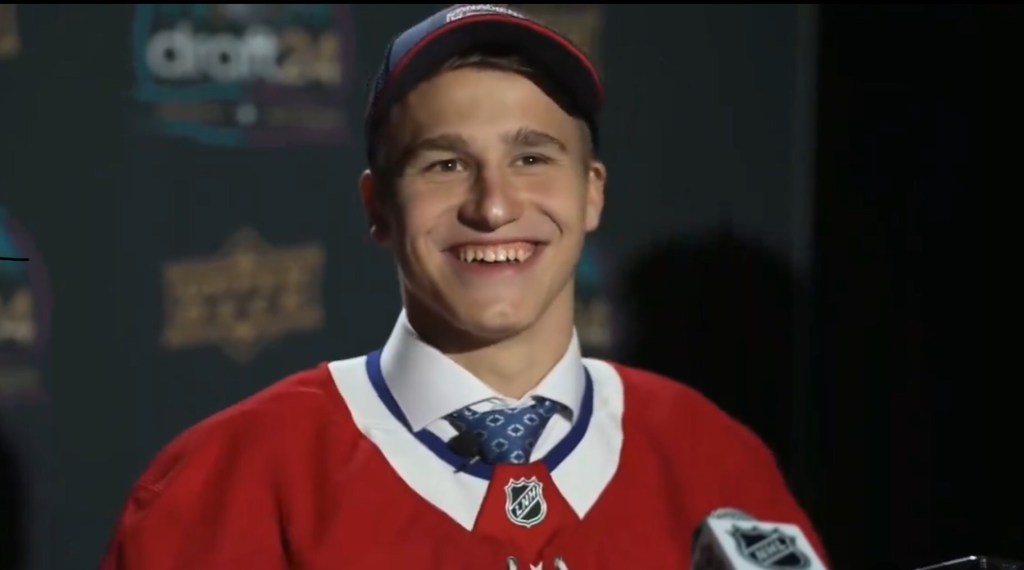
Next summer the contracts of Christian Dvorak, Joel Armia, Jake Evans, Michael Pezzetta and David Savard are all due to come off the books. That considerable cap space opens up at the same time that the young core will be will have been refined. Slafkovsky will be moving toward his prime years and Reinbacher and Demidov will be ready to play in Montreal. The three prizes of the high-pick years will be in place.
HuGo will have a good sense of any missing pieces just as the cap space is opening to go get them. The Habs will have likely had a high-ish pick draft before perhaps being able to declare the end of the rebuild in a year from now.
What’s outstanding for this intervening year?
In the approximate 12 months that remain (by my assessment) in the rebuilding process, there are several things we should be watching for. It promises to be an active year.
Let’s not dismiss the possibility of an August trade. Kent Hughes has made August trades in both previous summers with the Habs, and another wouldn’t surprise. The cap space is there. If HuGo can find a deal for a player that he believes can contribute to the path forward, he won’t hesitate. Rutger McGroarty still makes a ton of sense, and if a team like Vegas needs to find cap space, a player like Nicolas Roy is a good target. For the right price, perhaps Patrik Laine comes to Montreal.
HuGo will focus on moving out UFAs for fair value between now and the trade deadline. It’s unlikely that any of the current UFA crop will be re-signed. The exception may be Savard if deadline offers fall short. It’s also unlikely that any of the UFAs fetch a haul, unless someone has a very surprising season. That means if a reasonable deal presents, you take it. We’re dealing with delayed demolition and there’s no need to be greedy.
The evaluation period for some young players will come to an end and the field will be narrowed. There is no immediate rush, but the Habs can’t ice a football roster on their blue line. Eventually, decisions will have to be made. Johnathan Kovacevic was the first to go and more will follow.
HuGo will pounce if a missing piece becomes available. There is no need to wait for free agency next summer if they have assessed an area of need and a player who meets that need can be attained. Imagine this. The trade deadline comes and the Habs are sellers. Another seller is moving a UFA that is attractive to HuGo, and they think they can sign him long term. Why not outbid the others and make it happen?
We can expect a blockbuster deal, whether through free agency or trade, that is a significant needle mover for the Habs.
Are we there yet? No, but we’re close. And the rest of the ride promises to be wild.
 Hab At Her
Hi LoriFor this Habs fan a Saturday morning update
LikeLiked by 1 person
what a great article Lori. A logical common sense look at the Habs situation. I agree with you. Next year (25/26) should be the most exciting year in decades.
thanks for this
LikeLiked by 1 person
Decent article, but again (I’ve seen this a lot) the Bergevin hatred is very evident.
it should be clear that while the Gallagher contract was an overpay, 12 years of Gally at 5.1M averaged. On his first contract Gally scored an avg of ~26g per season (discounting penalties). It can be debated, but what do you pay a winger that raises everyone else on your line and is producing at that rate?
Also unfair is to talk about Berg “falling into” the core of Suzuki, Caufield and Guhle. Bergevin also saw Primeau as the future between the pipes in Mtl, so to say he had nothing after Price. If you’re going to place blame for players like Armia and Hoffman not living up to their contracts, and drafting decisions like KK, it’s disingenuous to not give credit for good signings and contracts. 3 (likely 4 with Roy) of Montreal’s top 6 F, 1 (likely 2 with Mailloux) of their top 4 D and 1 of their 2 goalies were all Bergevin’s trades/drafts.
The Mailloux ‘debacle’ was a calculated risk gone bad for Bergevin, but HE was the one who started to turn it into a story about redemption (likely by necessity).
Next, new management is not been perfect. Some of the returns – for example for Lekhonen – were underwhelming. It’s possible that’s “all there was”, but we’ll never know. It also remains to be seen what passing on Mitchkov will look like. Lastly, their inaction with the 3 goalie rotation and likely cost them additional assets and set back some of Primeau’s development.
I’ll say that I’m a big fan of new management and LOVE where the team is headed. I love the culture and long term signings and the new focus on development. But I don’t get the Bergevin hate. We know that Montreal is a fickle market, and selling a rebuild may be tough, so who knows what he wasn’t allowed to do during his tenure. He made some mistakes and it was definitely time to modernize the front office, but let’s not forget his incredible findings/pickups/trades (Byron, Danault, Petry, Lekky, Harvey-Pinard, etc).
Starting a rebuild is fairly easy. Finishing it (and your moves when you’re competing) is 100x more difficult. The true test of management will come in a 2-4 years. That’s when we’ll see how their trade acumen will be put to the test.
My point is that the Bergevin era had its flaws and ultimately didn’t get into the promised land, but don’t be a hater.
LikeLike
Bergevin hatred? Seriously? I’m not sure how you work, but I can tell you that my feelings don’t run that strong for a guy I’ve never met or about hockey.
Now if you suggested I’m critical of and highly disappointed in the Bergevin era, you’d be right on.
My number one criticism is the lack of vision. None of it came together in a cohesive vision. He did make some good moves. Danault and Petry are top trades for me, and getting Toffoli for the price he did in free agency was great.
But he also landed guys like Suzuki and Caufield quite by accident, added more stay at home D than any team needs, and alienated important players.
We can agree to disagree on his successes and failures, but hatred? For me that’s reserved for things bigger than a game.
LikeLike
Lori, first, it seems evident now that I used the wrong term when I discussed your criticism of Bergevin as ‘hatred’. Criticism is good for all business decisions, especially for passionate fan bases like ours. I think I was just used to seeing all the other – pretty aggressive – articles from guys like Brendan Kelley on the Gazette and all of the posts on X where folks claim he should never be in a management position again anywhere else.
I agree – mostly – with your assessment that Bergevin lacked vision. He jumped on opportunity as it came and, while he did focus on player work ethic and personalities, he definitely strayed from that a few times.
I think he believed that if he could fill his roster with B+ prospects who worked hard and had the right attitude, that this would lead to the promised land.
Still, I have a hard time accepting that Suzuki and Caufield were accidents. Unless you’re privy to backroom conversations, and while we know Suzuki may not have been his initial target, this story would have been very different conversation if Bergevin had passed on the deal because he didn’t see the value in Suzuki.
Likewise with Caufield, he took the chance when others didn’t. If you can’t give him proper credit for those moves, you can’t criticize other moves that looked ok at the time but with hindsight didn’t pan out.
At the end of the day, half of the Habs top 6F and half of top 4D were his pics/trades.
So while we can agree that he didn’t have the vision the team needed, his contributions shouldn’t be ignored.
LikeLike
Hi Lori, great read!
Your cogent takes remind me of that NL CBC morning radio show host and part-time Habs blogger I used to enjoy who titled it: The “H” is Not for Habs.
I think you hit just about all the right notes here. Thinking of our current crop of D, by my count we have 9 who are bona fide NHLers and one more will need to be dropped by the start of this season (unless, perish the thought, another huge injury lands on HuGo’s lap). Who would you expect to be traded, so as not to lose them to the waiver wire?
LikeLike
yes, another wonderful read! So very well presented and very much appreciated Lori! 🙏
LikeLiked by 1 person
l forgot to thank you for the article. Great debates can be had, and lots of opinions formed, but these articles take preparation and dedication to write.
Thanks for giving us something to read in the off season!
LikeLiked by 1 person